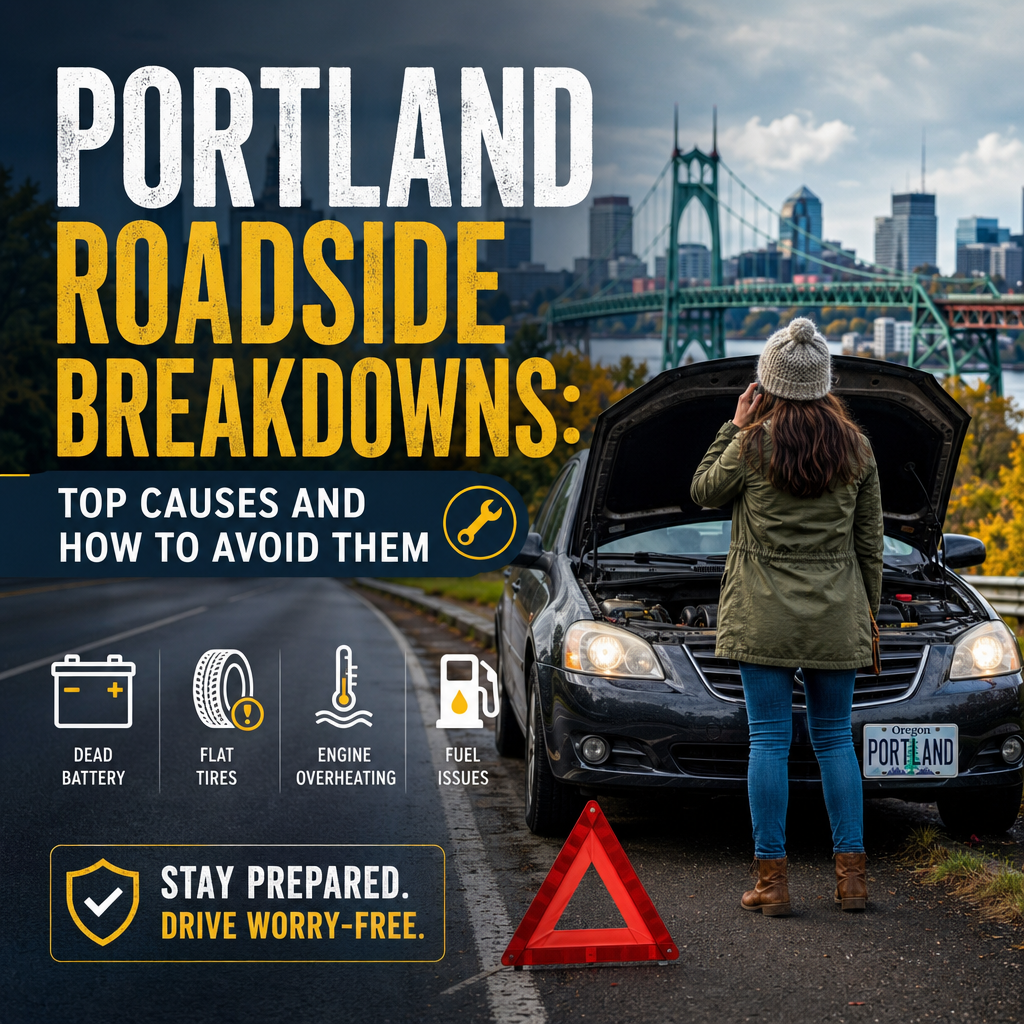
Portland Roadside Breakdowns: Top Causes and How to Avoid Them
Portland’s Most Common Roadside Breakdowns — And How to Avoid Them
Portland’s mix of rain, hills, and heavy commuter traffic creates a unique driving environment. Portland’s Most Common Roadside Breakdowns — And How to Avoid Them explores the failures drivers see most often here and gives practical, local tips to keep you rolling. Read on for easy prevention steps, what to carry, and how to react safely if the worst happens.
Why Portland’s roads are different
Portland’s temperate but wet climate means cars spend a lot of time in damp conditions. Add steep West Hills, frequent stop-and-go on I‑5 and I‑84, and seasonal potholes, and you get extra stress on batteries, tires, brakes, and electrical systems. Understanding the local causes helps you prioritize maintenance and avoid being stranded.
The most common breakdowns and how to prevent them
Dead battery
Why it happens: Cold, wet weather, short urban trips, and aging batteries are top causes. Corrosion on terminals is more likely with persistent moisture.

Prevention:
- Test battery health yearly, especially before fall/winter.
- Clean terminals and ensure tight connections.
- Limit prolonged accessory use while idling in traffic.
- Replace batteries every 3–5 years or as testing indicates.
Flat tires and blowouts
Why it happens: Potholes after winter, debris, curb strikes on narrow urban streets, and low tire pressure all raise the risk.
Prevention:
- Check tire pressure monthly and inspect tread depth.
- Rotate tires per your owner’s manual and replace when tread is low.
- Slow down over potholes; report large defects to Portland Bureau of Transportation.
- Carry a quality spare, jack, and lug wrench — or a portable inflator and tire sealant for temporary fixes.
Alternator and charging system failures
Why it happens: Heavy electrical loads (heated seats, lights, infotainment) and battery strain during short trips can overwork the alternator.
Prevention:
- Have the charging system checked during scheduled service if electronics act up.
- Replace serpentine belts when worn.
- Limit accessory use when the engine is idling for extended periods.
Overheating / cooling system issues
Why it happens: Low coolant, leaks, or a failing thermostat can cause overheating — common when climbing steep grades or in stop-and-go traffic.
Prevention:
- Inspect coolant level and condition seasonally.
- Replace hoses and clamps at the first sign of wear.
- Flush the cooling system per manufacturer intervals.
Fuel system problems / running out of gas
Why it happens: Getting distracted or underestimating distance between fuel stations on longer rural trips outside the city leads to being stranded.
Prevention:
- Don’t let your tank drop below a quarter on unfamiliar routes.
- Keep a small amount of emergency fuel if you frequently travel outside urban areas.
- Address fuel pump or filter issues if you experience sputtering or poor acceleration.
Electrical gremlins and sensors
Why it happens: Moisture and corrosion can trigger sensors, wiring shorts, and intermittent failures of starters, lights, or accessory systems.
Prevention:
- Inspect wiring harnesses during routine service, especially under the hood and at grounds.
- Seal exposed connectors and replace corroded components promptly.
- Use dielectric grease on terminals where appropriate.
How to avoid breakdowns — a simple maintenance checklist
- Monthly: Check tire pressure, fluid levels (oil, coolant, windshield washer), lights, and wipers.
- Every 6–12 months: Test battery and charging system; inspect brakes and suspension.
- Annually: Full vehicle inspection with alignment check and belt/hose review.
- Before long trips: Verify spare condition, top off all fluids, and check tire tread.
What to carry and what to do if you break down
Essentials to keep in your trunk:
- Charged phone and roadside assistance membership (AAA or local provider).
- Reflective vest, triangles, or roadside flares.
- Flashlight, basic tool kit, jumper cables, portable tire inflator/sealant.
- Water, blanket, and a small first-aid kit.
If you break down:
- Safely move off the road to the shoulder or nearest pullout.
- Turn on hazard lights and set up triangles behind your vehicle if safe.
- Call for help — use your roadside assistance or a trusted tow service.
- Stay inside the vehicle with doors locked if the shoulder is unsafe or visibility is poor.
Final thoughts
Portland’s weather and road conditions make certain breakdowns more likely, but most are preventable with simple maintenance and a modest emergency kit. Follow the checklist, address warning signs early, and you’ll cut the odds of a frustrating roadside stop — and handle it safely if it happens.