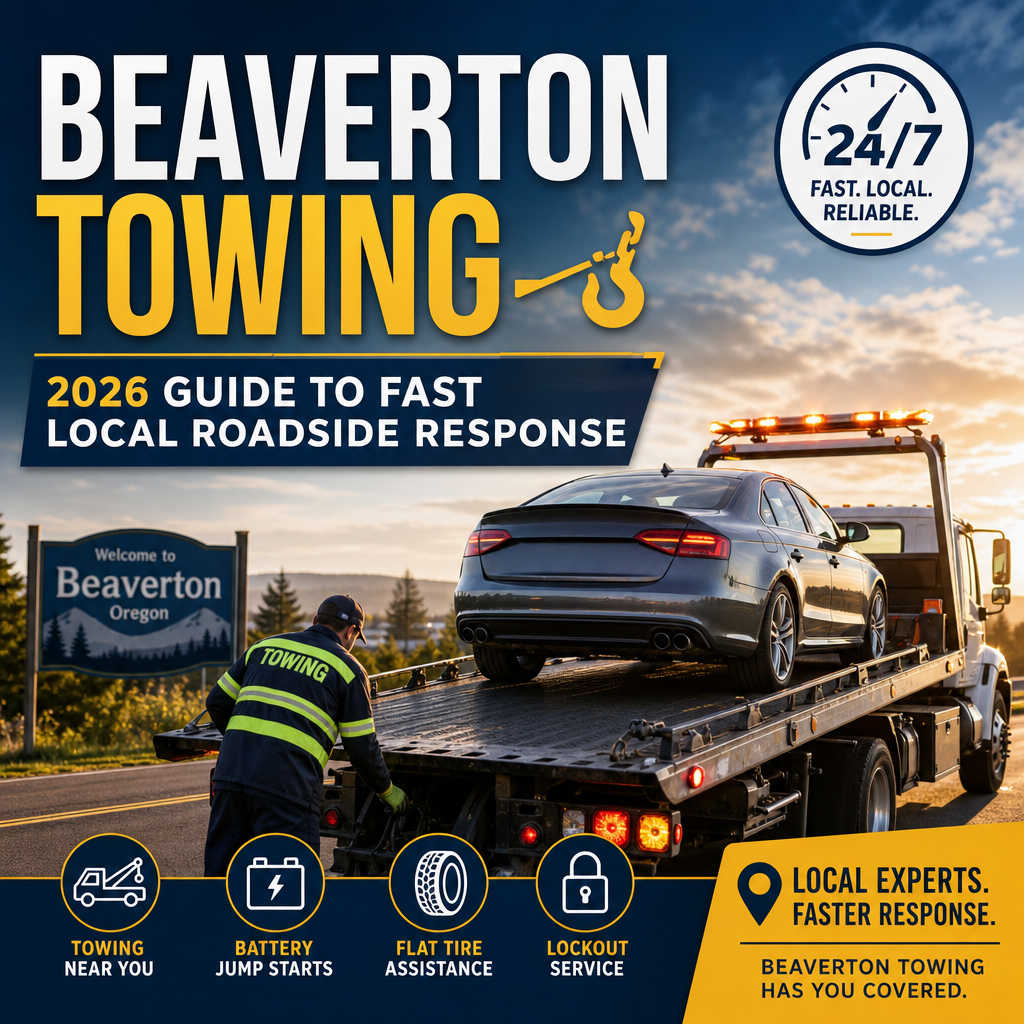
Beaverton Towing: 2026 Guide to Fast Local Roadside Response
Why Beaverton Drivers Need Fast, Local Towing: The 2026 Guide to Roadside Safety & Response Times
Unexpected breakdowns happen to everyone. For Beaverton drivers, quick access to fast, local towing can make the difference between a minor inconvenience and a dangerous, costly event. This 2026 guide explains why local response matters, what realistic response times look like, and how to prepare for roadside incidents on Beaverton roads.
Why local towing matters in Beaverton
Beaverton’s road network includes busy corridors (like Highway 217 and Canyon Road), suburban neighborhoods, and stretches that border rural hills. Local towing companies:
- Know the fastest routes and common congestion points.
- Can reach you quicker than regional or non-local services.
- Understand local ordinances, impound procedures, and repair shop options.
- Are familiar with seasonal hazards—heavy rain, winter weather in higher elevations, and occasional debris after storms.
Fast, local towing reduces time spent on the roadside, lowering the risk of secondary collisions, vehicle theft, or exposure to the elements.

Typical response times in 2026
Response times depend on location, time of day, and demand. Expect the following typical ranges:
- Urban/suburban (within Beaverton city limits): 15–30 minutes.
- Major corridors and highways: 20–40 minutes, longer during rush hour.
- Remote/rural outskirts: 30–60+ minutes, depending on access and weather.
Modern local towers often use GPS dispatch and real-time traffic integration to improve ETAs. In emergencies, response is prioritized, but having realistic expectations helps you stay safe while you wait.
Safety steps to take immediately
After a breakdown or collision, protect yourself and others with these steps:
- Move to safety if possible: Get off the road, onto the shoulder, or into a parking area.
- Turn on hazard lights and set out reflective triangles if available.
- Stay in the vehicle if roadside conditions are hazardous; otherwise, stand well away from traffic.
- Call 911 for injuries, active traffic hazards, or vehicle fires.
- Contact a fast, local towing service and provide exact location, vehicle description, and any hazards.
- Document the scene with photos, especially after collisions, and exchange information when safe.
Keeping calm and following a checklist reduces risk and helps tow operators respond efficiently.
What to ask when you call a towing company
Not all towing calls are equal. Ask these quick questions to confirm capabilities and timelines:
- “What is your ETA?” (Get a realistic time window.)
- “Are you equipped for my vehicle?” (Flatbed for low cars, heavy-duty for trucks, EV-capable for electric vehicles.)
- “Do you offer mobile services?” (Some breakdowns can be fixed on-site.)
- “What are your rates and payment methods?” (Request an estimate and any storage fees.)
- “Are you licensed and insured?” (Confirm credentials for liability protection.)
A local company should answer these promptly and provide tracking or driver updates in 2026.
EVs, hybrids, and modern vehicle considerations
As of 2026, many Beaverton drivers use electric or hybrid vehicles. Fast, local towing providers must be trained for EV towing—battery shutdown procedures, towing on flatbeds rather than wheel-lift towing for many models, and safe handling of high-voltage systems. Ask about EV experience before confirming a tow.
Memberships and roadside assistance options
Consider options that promise faster service:
- Auto club memberships (AAA and regional alternatives).
- Insurance-provided roadside assistance.
- Local towing company membership plans with priority dispatch.
- Manufacturer-paid roadside assistance for new vehicles.
Memberships often reduce wait times and simplify payment, but keep local towing numbers saved on your phone as a backup.
Final tips for Beaverton drivers
- Save two or three trusted local towing numbers in your phone.
- Keep an emergency kit: flashlight, reflectors, basic tools, phone charger, water.
- Learn main cross streets and mileposts on the highways you use most—exact location speeds up response.
- Review your insurance and roadside benefits annually.
Fast, local towing is about more than convenience—it’s a safety strategy. For Beaverton drivers, a quick, knowledgeable tow operator keeps you out of harm’s way, minimizes repair complications, and gets you moving again sooner. Stay prepared, know your options, and prioritize services that offer rapid, local response in 2026 and beyond.