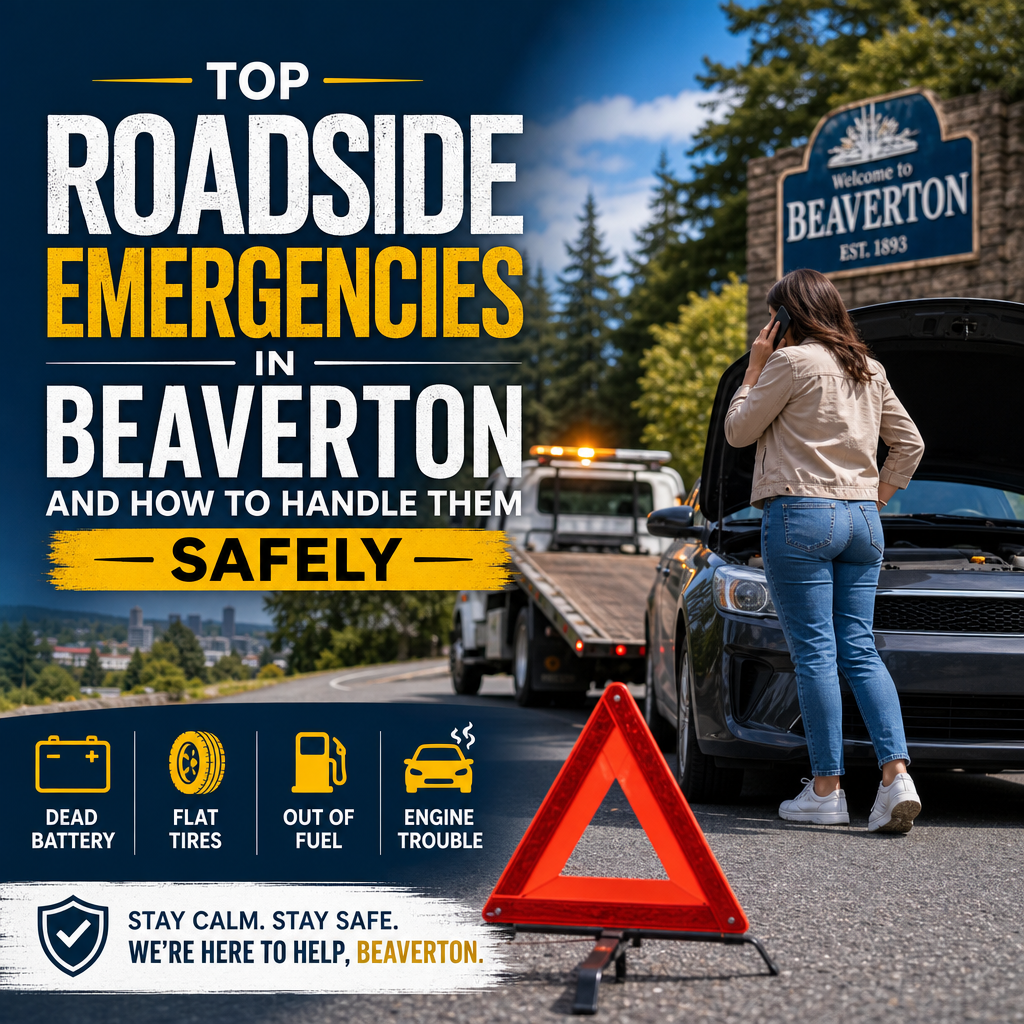
Top Roadside Emergencies in Beaverton and How to Handle Them Safely
Top Roadside Emergencies in Beaverton — And How to Handle Them Safely
Being stranded on the side of the road is stressful anywhere, but knowing the most common roadside emergencies in Beaverton — and how to handle them safely — makes a big difference. Whether you commute on OR‑217, navigate city streets, or drive US‑26, the same practical steps will keep you and your passengers safer and get you back on the road faster.
Before you leave: simple preparations that help
A little preparation reduces panic:
- Keep a charged phone and an in‑car charger.
- Carry a basic emergency kit: reflective vest, flashlight with extra batteries, warning triangles or flares, blanket, water, nonperishable snack, basic tools, jumper cables, and a first‑aid kit.
- Know your roadside assistance plan (AAA, insurer roadside help, or manufacturer coverage) and keep their number accessible.
- Check weather forecasts — Beaverton sees a lot of rain and occasional icy patches in winter — and adjust travel plans accordingly.
Flat tire: pull over, warn others, and change or call for help
Flat tires are the most common roadside issue.

- Safely slow down, signal, and pull over to a wide, level spot away from traffic.
- Turn on hazard lights and set warning triangles behind your vehicle.
- If you know how and it’s safe, use your jack and spare to change the tire. Follow the owner’s manual.
- If you aren’t comfortable changing a tire or you’re on a busy road (like OR‑217 ramps), call roadside assistance or a tow service.
Dead battery: jump start or wait for help
A dead battery is usually straightforward but potentially dangerous if you stall in traffic.
- Move your vehicle out of traffic if possible. Turn on hazards.
- If you have jumper cables and another vehicle, follow correct jump‑starting procedures (positive to positive, negative to a grounded metal surface on the dead car).
- If no help is available, call roadside assistance. Cold, wet weather and electronics drain can make batteries more likely to fail.
Engine overheating: stop, cool down, then assess
Overheating can lead to severe engine damage.
- Pull over immediately to a safe spot and turn off the engine.
- Wait at least 30 minutes for the engine to cool before opening the hood; steam or hot coolant can cause burns.
- Check coolant level only when cool; add coolant or water if you have it and suspect a low coolant situation.
- If overheating persists or you see leaks or steam, call a tow — driving can ruin the engine.
Running out of gas: avoid panic, request fuel delivery
Running out of fuel happens to everyone eventually.
- Turn on hazards and pull off as far as safely possible.
- If you’re within walking distance of a station and it’s safe, walk there; otherwise, call roadside assistance for fuel delivery.
- Consider keeping a small approved fuel container in your trunk for emergencies, but store it safely and legally.
Lockout: stay calm, don’t break windows
Locking keys in the car is inconvenient but manageable.
- If conditions are safe, stay with the vehicle and call a locksmith or your roadside provider.
- Some newer cars offer remote unlock via smartphone apps—use those if available.
- Avoid trying makeshift entry methods that can damage the vehicle or create safety hazards.
Collision or medical emergency: prioritize safety and call 911
If you’re involved in an accident or someone is injured:
- Call 911 immediately for any injuries or hazards.
- Move to a safe place if possible, but don’t leave seriously injured people unattended.
- Exchange contact and insurance information with the other party and take photos of the scene.
- Notify your insurer as soon as practical.
Stuck in mud or snow: gentle techniques, then call for a tow
Beaverton’s wet roads and occasional snow can leave vehicles stuck.
- Try to gently “rock” the car by shifting between drive and reverse, avoiding high revs.
- Reduce tire pressure slightly for better traction, use mats or branches under tires, or lay down traction aids.
- If you can’t get free quickly or conditions are worsening, call a tow service for safe extraction.
Final tips for staying safe in Beaverton
- Use hazard lights and reflective gear whenever you stop.
- Prefer well‑lit, populated pullouts if you must stop at night.
- Keep important numbers in your phone and printed in the glove box.
- If unsure about safety, call authorities or roadside services rather than attempting risky repairs.
Knowing how to handle the most common roadside emergencies in Beaverton — and staying calm — will protect you, your passengers, and other road users. A prepared driver is a safer driver.