Beaverton Roadside Emergencies: What to Do When Your Car Breaks Down
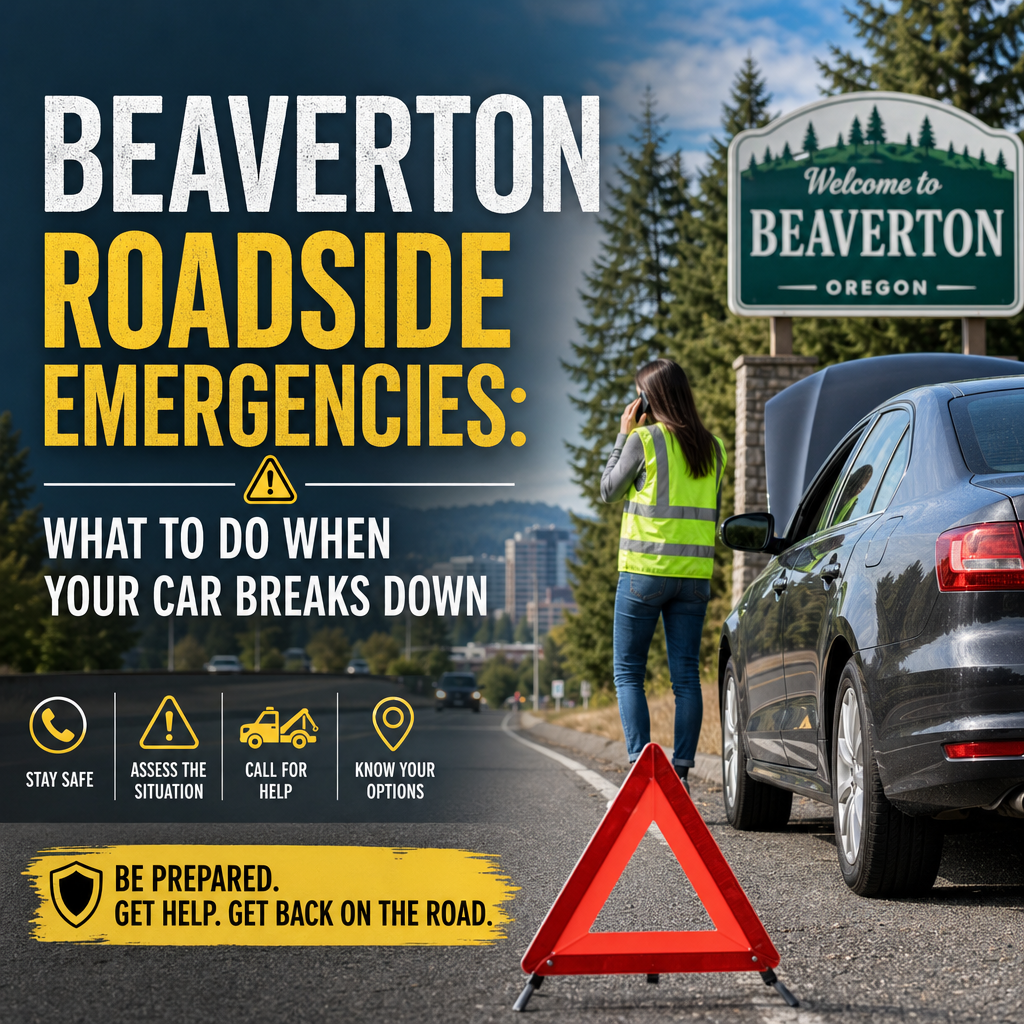
Beaverton Roadside Emergencies: What To Do When Your Car Breaks Down
Car trouble is stressful anywhere, but a breakdown in Beaverton can be especially unnerving when you’re on a busy road or unfamiliar side street. Knowing the basic steps to stay safe and get help quickly makes a big difference. This guide covers what to do right away, simple fixes you can try, and how to prepare for future Beaverton roadside emergencies.
Safety first: immediate actions
When your car starts acting up, prioritize safety.
- Signal and slow down gradually. Avoid sudden braking.
- Move your vehicle out of traffic. Aim for a shoulder, parking lot, or wide curb.
- Turn on your hazard lights to warn other drivers.
- If you can, set up reflective triangles or cones behind your car—especially at night or in rainy conditions.
If you’re on a busy road or feel unsafe, lock the doors and stay inside with your seatbelt on. If there’s smoke, fire, or you smell fuel, get everyone out and move a safe distance away.

Communicate your location clearly
Clear location information speeds up assistance.
- Note the nearest cross street, landmark, or mile marker.
- Use your phone’s map app to get coordinates if you can. Screenshot them in case service drops.
- Tell the dispatcher you’re in Beaverton and provide specific directions (e.g., “near the Beaverton Creek Trail parking lot” or “at SW Canyon Road and 158th”).
If possible, share the make, model, color, and license plate of your car so responding services can find you faster.
Quick checks and basic fixes
Some problems have quick fixes you can handle safely.
- Flat tire: Pull off to a safe spot, use your hazard lights, and change the tire if you have a spare and know how. If not, call for a tow or roadside assistance.
- Dead battery: Try a jump start using jumper cables and another car. If unfamiliar with the process, ask for professional help.
- Overheating: Turn off the AC, open the vents, and turn on the heater to help draw heat from the engine. Let the engine cool before checking coolant levels.
- Empty fuel: If you misjudged your fuel, local gas delivery services or a friend can bring fuel to you. Don’t attempt to siphon from another vehicle.
Only attempt repairs you’re comfortable doing. If you must work on the car, keep tools and reflective gear visible and stay away from traffic.
When to call for help
Call 911 if anyone is injured, there’s a fire, or the vehicle is creating a dangerous situation. For non-emergencies, consider:
- Roadside assistance through your insurance or providers like AAA.
- Your vehicle’s manufacturer service (OnStar, roadside app).
- Local tow or auto repair shops in Beaverton for a tow or mobile mechanic.
If your car is blocking traffic or creating a hazard, contact Beaverton Police non-emergency line so they can advise or assist. Avoid sharing private details in public posts—use direct calls or official apps.
Staying comfortable while you wait
Waiting for help can be unpleasant—these tips help:
- Conserve phone battery by closing background apps and lowering screen brightness.
- Stay visible: keep hazard lights on and use a flashlight or reflective triangle at night.
- In winter, run the engine periodically for heat but crack a window slightly to avoid carbon monoxide, and never rest with the exhaust blocked by snow.
- In summer, use shade, sunshades, or fans to stay cool; drink water if available.
Prepare to prevent future Beaverton roadside emergencies
A little preparation reduces stress and downtime.
- Build an emergency kit: flashlight, reflective triangles, first-aid kit, jumper cables, gloves, basic tools, water, and nonperishable snacks.
- Maintain your vehicle: regular oil changes, tire pressure checks, and battery inspections.
- Save important numbers in your phone: insurance roadside assistance, AAA, a trusted local tow, and Beaverton non-emergency services.
- Consider a compact roadside membership or mobile mechanic app for fast service.
Final thought
Beaverton roadside emergencies don’t have to ruin your day. Stay calm, move to safety, communicate your location, and call the right help. With basic preparation and these steps, you’ll handle most breakdowns confidently and get back on the road sooner.