
Raleigh Hills Drivers: How to Handle a Flat Tire on Busy Roads
Raleigh Hills Drivers: How To Handle a Flat Tire on Busy Roads
A flat tire can turn a quick trip into a stressful situation — especially on busy roads. Raleigh Hills drivers need practical, calm steps to stay safe and get back on the move. This guide walks you through what to do the moment you notice a flat, whether you can change the tire safely, and how to prevent future roadside headaches.
First priorities: safety and control
When you feel a sudden vibration or hear unusual noise, stay calm and keep a firm grip on the wheel. Do not slam on the brakes.
- Signal and move off the road gradually to the right, to the shoulder, breakdown lane, or a wide, well-lit area.
- Turn on hazard lights immediately to warn other drivers.
- If you can’t reach a safe spot, slow down and crawl forward until you can.
- Once stopped, engage the parking brake and, if possible, put the vehicle in park (or in gear for a manual).
If you are on a high-speed or narrow road and cannot get to a safe location, call emergency services or roadside assistance. Your safety is more important than changing the tire.

Stay visible and protected
On busy roads, visibility and protection from traffic are critical.
- Exit the vehicle on the passenger side away from traffic, if it’s safe.
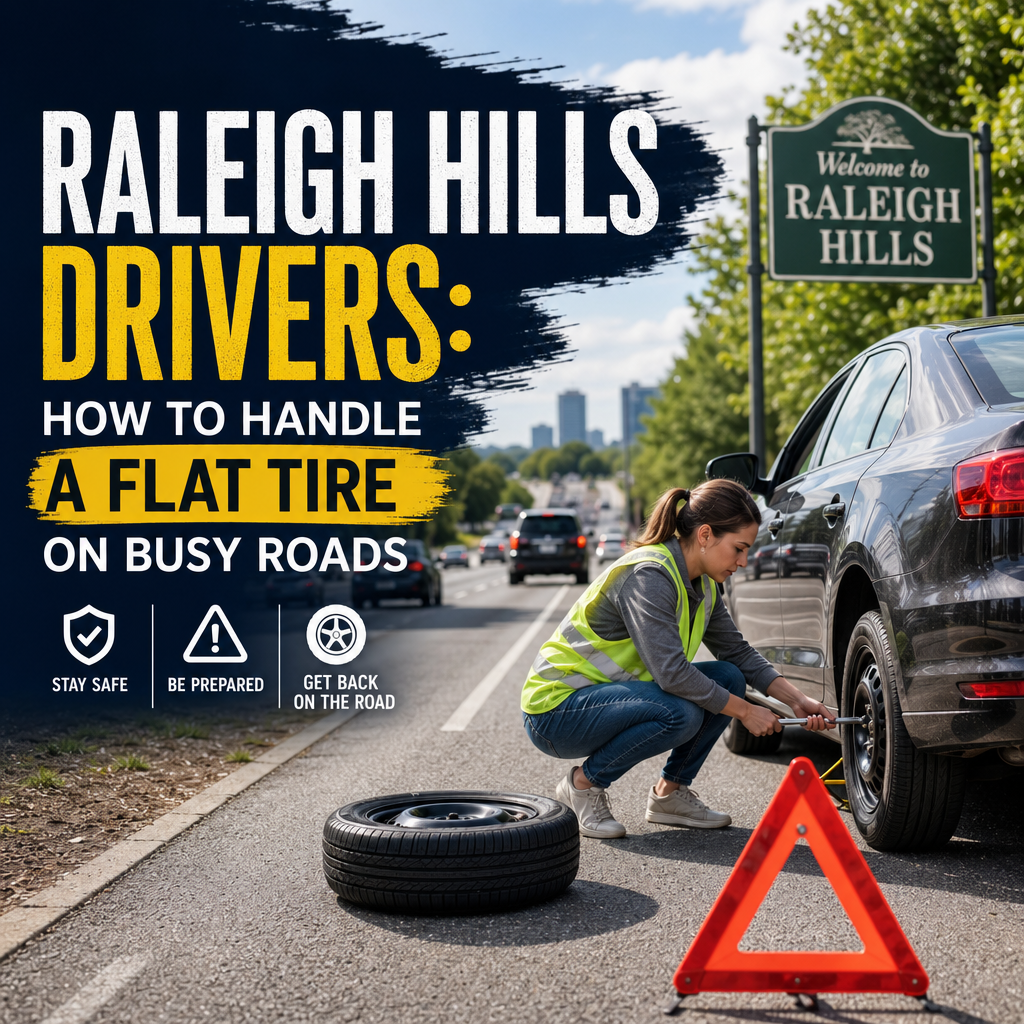
- Put on a reflective vest and place hazard triangles or flares behind your vehicle if you have them.
- Keep passengers, especially children, away from the road and behind guardrails or well off the shoulder.
- If traffic is heavy or visibility is poor, consider staying in your vehicle with seatbelt fastened until help arrives.
Decide: change the tire or call for help?
Before you attempt to change the tire, assess the situation:
- Is there a stable, flat surface to work on?
- Is traffic too fast or too close to make changing the tire risky?
- Do you know how to use your jack and lug wrench?
- Is your spare tire inflated and in good condition?
If the answer to any of these is “no,” call roadside assistance or a tow. Changing a tire on a busy road can be dangerous without the right conditions and equipment.
How to change a tire safely (if conditions allow)
If you’ve determined it’s safe, follow these steps in order:
- Apply the parking brake and place wheel chocks behind the opposite wheel if available.
- Remove the hubcap (if present) and loosen the lug nuts half a turn while the wheel is still on the ground.
- Position the jack at the manufacturer-recommended jacking point. Raise the vehicle until the flat tire is several inches off the ground.
- Remove the lug nuts and take off the flat tire.
- Mount the spare, align it with the wheel studs, and hand-tighten the lug nuts.
- Lower the vehicle until the spare touches the ground, then tighten the lug nuts in a star (crisscross) pattern.
- Lower the vehicle completely and torque the lug nuts to the manufacturer’s recommended specification as soon as possible.
- Stow the flat tire, tools, and jack, and check the spare’s pressure. Drive slowly to a nearby repair shop.
Remember: many spares (especially “donut” spares) have speed and distance limits—usually 50 mph and 50–70 miles. Get the damaged tire repaired or replaced promptly.
Alternatives: tire sealant and inflators
If the puncture is small and you carry a tire sealant or inflator kit, it can be a quick temporary fix. Use sealant only for minor punctures and follow the product instructions exactly. These solutions are temporary — drive cautiously to a tire shop.
Preventive tips for Raleigh Hills drivers
- Regularly check tire pressure and tread depth.
- Keep a full-size or high-quality spare and a properly rated jack and lug wrench in your vehicle.
- Pack a roadside emergency kit: reflective vest, triangles, flashlight, gloves, and a portable tire inflator/sealant.
- Consider a roadside assistance plan for peace of mind.
- Practice changing a tire in a safe environment so you know the process before an emergency.
After the incident
Have your tire inspected by a professional to determine whether it can be repaired or needs replacement. Also check the wheel and suspension for damage. If you had to use the spare, have the lug nuts re-torqued and the main tire repaired or replaced as soon as possible.
Handling a flat tire on a busy road can be stressful, but with the right mindset and preparation, Raleigh Hills drivers can manage the situation safely and efficiently. Keep safety first, know your limits, and rely on roadside assistance when in doubt.