
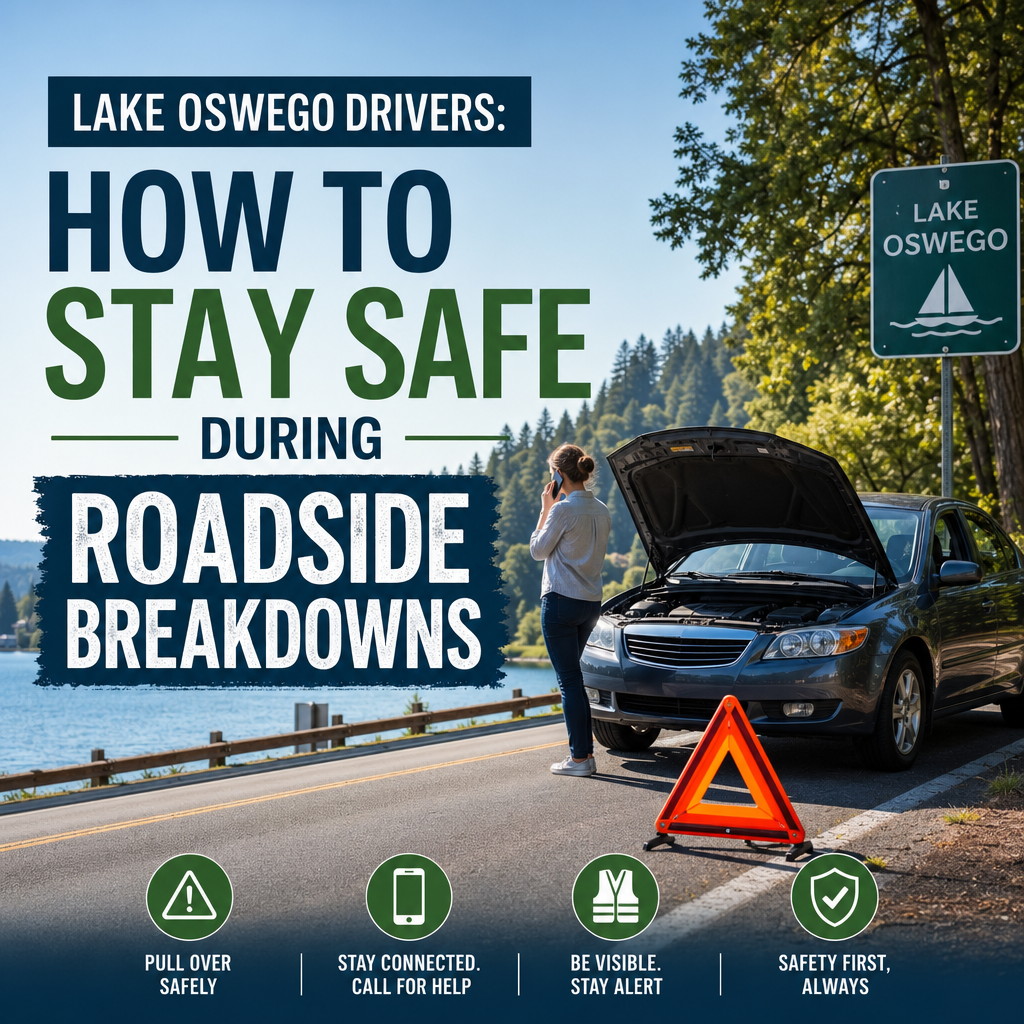
Lake Oswego Drivers: How to Stay Safe During Roadside Breakdowns
Lake Oswego Drivers: How to Stay Safe During a Roadside Breakdown
A roadside breakdown is stressful no matter where you live. For Lake Oswego drivers, familiarity with local roads helps—but it’s the preparation and the steps you take during an incident that keep you safe. This guide walks through clear, practical actions to take before, during, and after a roadside emergency.
Prepare Before You Drive
Preparation reduces panic and shortens dangerous time on the shoulder.
- Keep a charged phone and a car charger with you at all times.
- Join a roadside assistance program (insurance, auto club, or manufacturer coverage).
- Assemble an emergency kit: flashlight, reflective vest, basic tools, jumper cables, tire pressure gauge, portable air pump, first-aid kit, bottled water, and nonperishable snacks.
- Carry a reflective warning triangle or flares and a high-visibility vest—these improve visibility to other drivers.
- Know your vehicle’s basic spare setup and the location of the jack and lug wrench.
Routine checks also help: monitor tire pressure, oil, coolant, and battery health to reduce the chance of a breakdown.

What to Do During a Breakdown
If your vehicle starts acting up, prioritize safety and visibility.
-
Pull over safely
- Signal, reduce speed gradually, and aim for a shoulder, turnout, or parking lot.
- Avoid stopping on curves or narrow shoulders where other drivers have limited sight lines.
-
Make your vehicle visible
- Turn on hazard lights immediately.
- Set up a reflective triangle or flares 10–30 feet behind the vehicle if it’s safe to exit.
- Keep your hazard lights on while you wait for help.
-
Stay in or near your vehicle (depending on risk)
- If you are on a busy road or freeway, stay inside with seatbelts fastened. The cabin is generally safer than standing outside.
- If you can safely reach a guardrail or a well-lit area away from traffic, exit the vehicle on the passenger side and move there.
- Keep doors locked if you stay inside, and lower your window slightly to communicate with responders.
-
Call for help
- Contact your roadside assistance provider and give clear details: location, vehicle description, and the issue.
- If you feel threatened or are in immediate danger, call 911. For non-emergencies, contact local police or Lake Oswego’s non-emergency line.
-
Be cautious of strangers
- Accept help from uniformed tow or service providers from reputable companies.
- If someone offers to help and you’re unsure, ask them to wait while you call your roadside assistance to confirm. Never let unknown people into your vehicle.
If You Must Change a Tire
Changing a tire at the roadside increases your exposure to traffic—only do it if you can safely pull over to a wide, flat area.
- Set the emergency brake and block the opposite tire with a rock or wheel chock.
- Put on your reflective vest before exiting the vehicle.
- Jack the car on the manufacturer-specified jacking point and follow the lug nut pattern when loosening and tightening.
- If conditions or location feel unsafe, wait for a tow or mobile tire service.
Staying Safe at Night and in Bad Weather
Visibility and traction are the main concerns.
- Position your vehicle as far off the road as possible and use all available lighting.
- If flooding or heavy snow makes the shoulder unsafe, find the next safe exit or pull into a commercial driveway or parking lot.
- Keep blankets and warm clothing in your kit during colder months to avoid hypothermia while you wait for help.
After the Roadside Emergency
Once you’re safe and back on the road:
- Inspect your vehicle if repairs were performed. Verify the lug nuts are properly tightened and fluid levels are adequate.
- Document the incident: take photos of the scene, vehicle damage, and any service receipts.
- Report scams or suspicious towing behavior to local authorities and your insurance company if applicable.
- Rest and reassess your route—fatigue can increase the risk of further trouble.
Quick Checklist for Lake Oswego Drivers
- Phone charged and car charger available
- Roadside assistance plan active
- Emergency kit with visibility tools
- Know how to safely pull over and when to stay in the vehicle
- Verify any helper’s credentials; don’t accept unsolicited services
- Keep local non-emergency numbers handy
Being prepared and keeping a calm, safety-first mindset are the best defenses against the stress of a roadside breakdown. Lake Oswego drivers who follow these steps can shorten their wait, avoid unnecessary risks, and get back on the road with confidence.