
Tualatin Traffic Hotspots: Where Breakdowns Happen Most Often
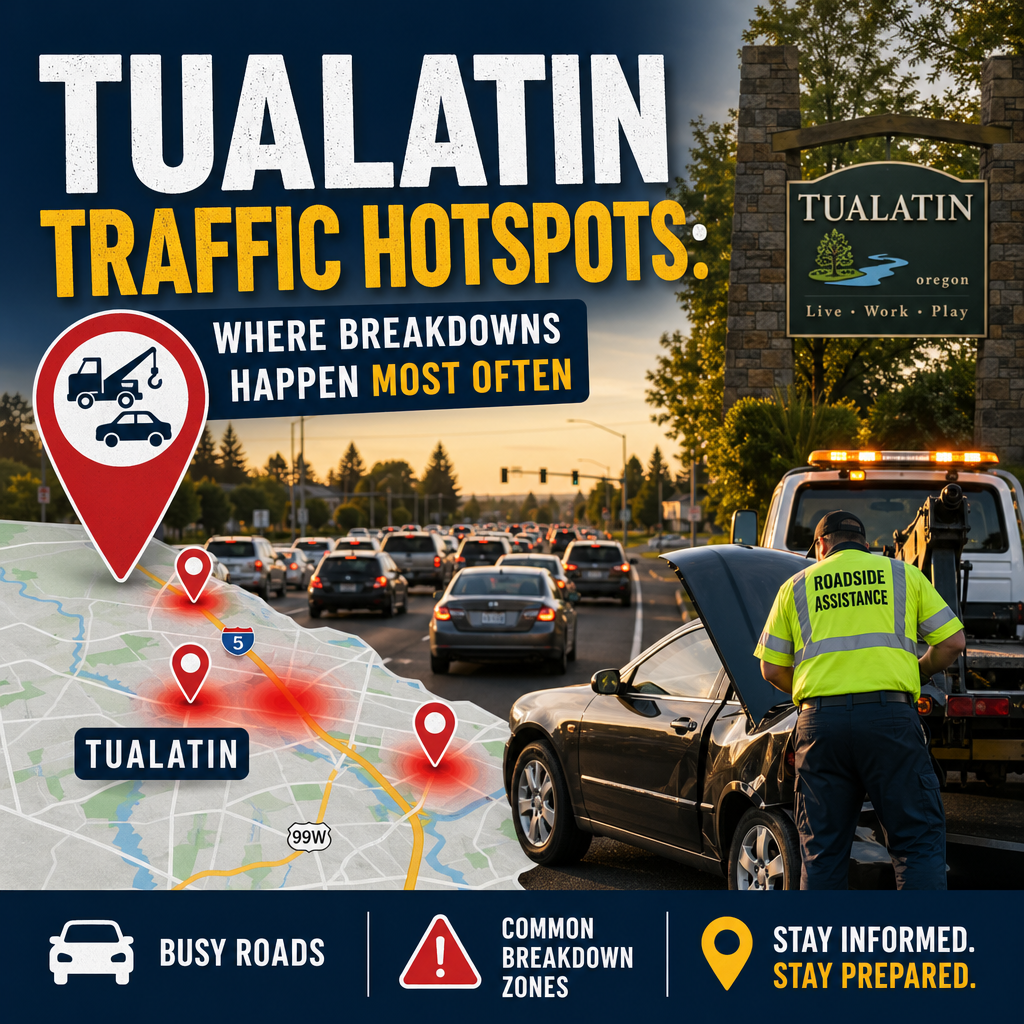
Tualatin’s Traffic Hotspots: Where Breakdowns Happen Most Often
Tualatin’s Traffic Hotspots: Where Breakdowns Happen Most Often is a question drivers and commuters ask often. Whether you’re heading to work, dropping kids at school, or shopping at Bridgeport Village, knowing where breakdowns and slowdowns occur can help you plan safer, faster trips. This guide highlights the common trouble spots and gives practical tips to avoid becoming part of the problem.
Common locations for breakdowns
Breakdowns tend to cluster where traffic is heavy, lanes merge, or services are limited. In Tualatin, the most frequent areas include:
- Major highway corridors and ramps
- Interstate on- and off-ramps often see stopped vehicles from mechanical failure or minor collisions. These ramps funnel high-speed traffic into slower local roads and create pinch points.
- OR-99W (Pacific Highway)
- A busy arterial through Tualatin with many driveways, intersections, and commercial entrances. Vehicles pulling over or stalling here can block a lane or force abrupt lane changes.
- Commercial and shopping zones
- Areas such as Bridgeport Village and nearby shopping strips attract heavy short-trip traffic. Parking lot exits and busy storefronts lead to frequent slowdowns and occasional disabled vehicles.
- Boones Ferry Road and other commuter arterials
- These roads carry steady commuter flows and have limited shoulders. A stalled car during rush hour can quickly create long backups.
- River crossings and bridges
- Bridges and river-crossing segments reduce maneuvering space. When a vehicle breaks down on these narrow stretches, traffic backups form quickly.
Why breakdowns cluster in these spots
Several common causes explain why these locations see more problems:

- High traffic volume: More cars mean higher chances of mechanical failures, collisions, and driver errors.
- Merging and lane changes: Where lanes converge, drivers have less reaction time, increasing the risk of contact and stalls.
- Limited shoulder space: Some routes offer minimal room to pull over safely, so disabled vehicles remain in travel lanes.
- Frequent stops and turns: Commercial corridors with many driveways increase sudden stops and slow-moving traffic, raising the likelihood of breakdowns.
- Seasonal and weather factors: Rain and cold weather increase mechanical issues and reduce traction, making breakdowns and collisions more likely.
Practical tips to avoid becoming a traffic statistic
A few simple practices reduce the likelihood and impact of a breakdown:
- Maintain your vehicle: Regular oil changes, battery checks, and tire inspections cut the risk of unplanned stops.
- Plan travel times: Avoid peak commute hours if possible, or use real-time traffic apps to reroute around known congestion.
- Carry an emergency kit: Include a flashlight, reflective triangle or vest, basic tools, jumper cables, and a phone charger.
- Use safe stopping procedures: If you must pull over, get as far off the roadway as possible, turn on hazards, and exit the vehicle only when it’s safe.
- Report incidents quickly: Contact emergency services or roadside assistance so the disabled vehicle can be moved and traffic can be cleared.
Who to contact when breakdowns happen
Knowing the right agency to call helps clear roads faster:
- Emergency situations: Dial 911 for collisions or if anyone is injured.
- Interstate incidents: ODOT (Oregon Department of Transportation) coordinates incidents on I-5 and other state highways. Use 511 Oregon or the ODOT incident hotline for updates.
- Local roads: Tualatin Public Works handles certain local roadway issues; non-emergency concerns can often be reported through the city’s website or non-emergency police line.
- Roadside assistance: Personal or membership services (AAA, insurer-provided assistance) often provide faster on-scene help than towing companies called through other means.
Small actions, big impact
Reducing the frequency and consequence of breakdowns in Tualatin requires both infrastructure and driver behavior. City planning and highway maintenance help, but drivers make the immediate difference: maintain your vehicle, choose safer pull-over spots, and share real-time traffic updates when you can. By being proactive, you can avoid the city’s most common trouble spots and keep traffic moving for everyone.
Remember, the next time you’re traveling through Tualatin, a little preparation goes a long way—especially in the places where breakdowns happen most often.